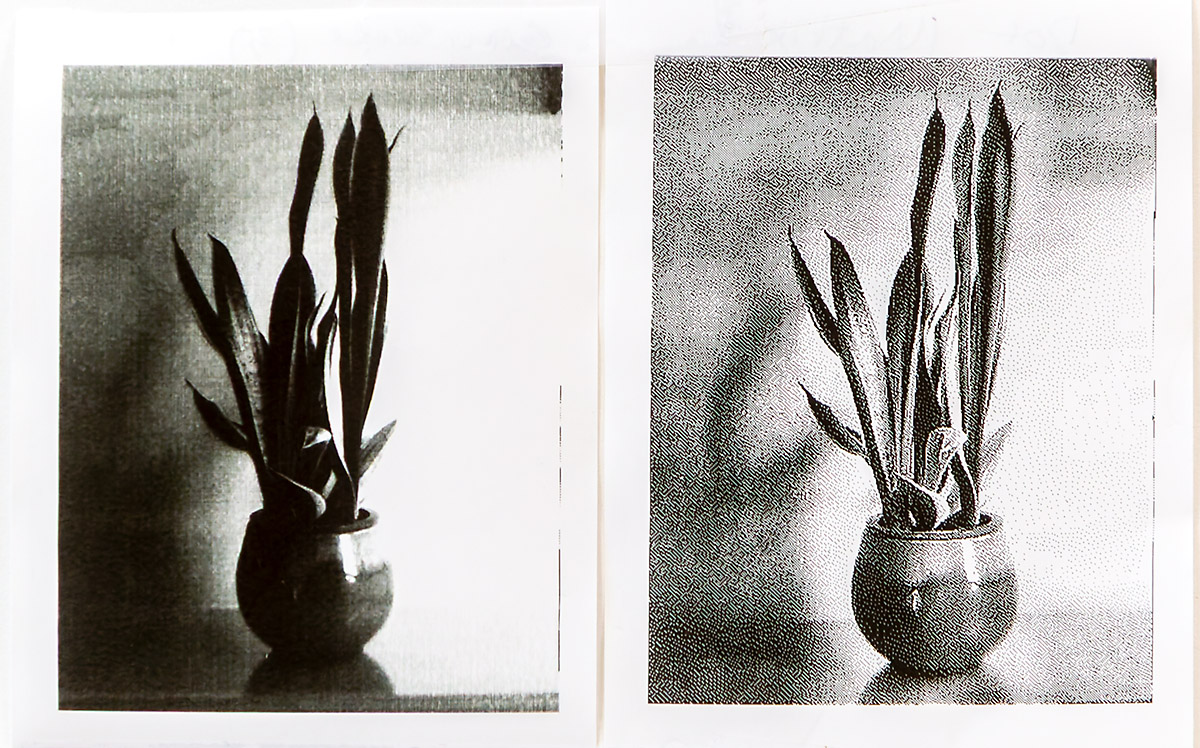
Domesticated Landscape, 2026 copyright Douglas Stockdale –
I am having a little fun with what could be considered some “non-serious” alternative photography; thermal print cameras, aka ‘kids’ camera. This all stated with being invited to be part of the Mute Photo Festival as one of the four jurors, then deciding I need to know what the artistic challenges might include for thermal-printing, I purchased a Vivitar Prinstax Instant Print Camera ($40 + 32Gb micro-SD card) KidsCam to experiment with.
These relatively inexpensive cameras ($50 – 100 USD) are meant to be used by children, perhaps even 5 years old (or younger?) depending on which model you purchased. Sorry, but the pink camera with bunny ears was not one I could take out in public, although it would probably generate a laugh or two. hmmmm. Maybe I should have?
Thermal-print cameras do not use film (has a sensor, mine is about 1Mpx), while these include a thermal printer similar to ones used by stores to print receipts. Thus, just need a few rolls of the right thermal paper and the printing is endless. These thermal print cameras come in a variety of configurations and I chose one that I needed to purchase a 32Gb micro-SD card to capture the digital image files. I also chose a camera that has two print options; grayscale and dot-matrix. That means I can change the settings and print the image file with either (or both) of the two options; grayscale or dot-matrix (above, grayscale on the right, dot-matrix on the left). My Vivitar thermal-print camera also includes four contrast level settings, with both of the two prints above at maximum.
As to print quality, these relatively inexpensive thermal-print cameras are almost entirely plastic, including the lens. Mine states that the lens is a zoom, while it appears that it’s a digital-zoom (crop), not a mechanical zoom. I was surprised by the differences with my camera between the two printing processes with the dot-matrix reminding me of the grain of Tri-X film, with the shadows having more detail, while the grayscale appeared “smoother” with more contrast (loss of both shadows and highlights) and perhaps a bit more impressionistic. Two different looks, thus two creative print image options.
I have not pulled the micro-SD card to download on my computer and evaluate the residual image files (JPEG) with PhotoShop. Something to evaluate later, while at the moment, I am enjoying my tiny prints (1-7/8″ x 2-3/8″).
So far, so good, an interesting diversion going small after an extensive period of going “big”.
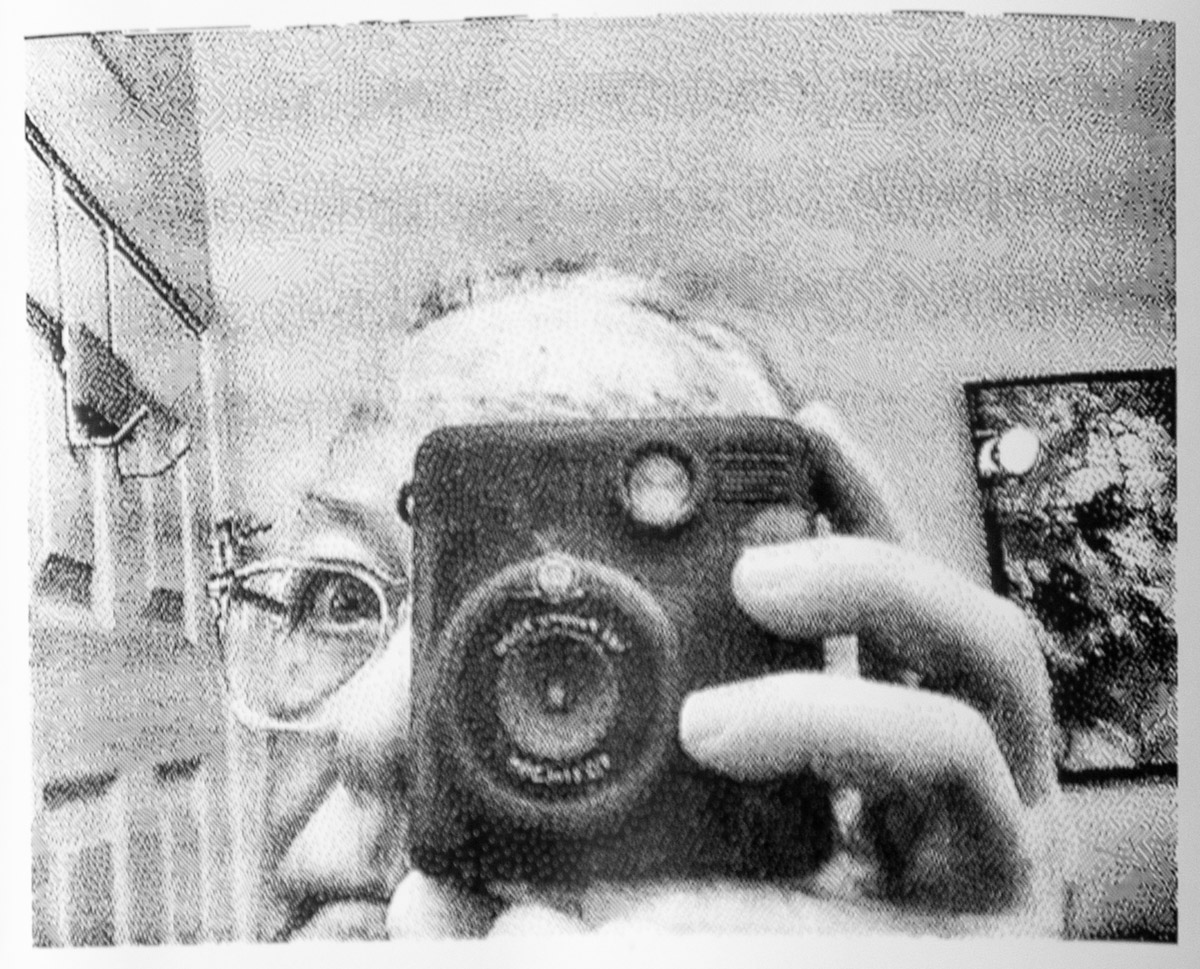
Oh, and as a juror, I needed to provide a selfie (both me and my Vivitar for context), which is not an original composition idea, I thought playful enough. Btw, using dot-matrix mode and rephotographing the print, not to scale. (Blow-up!)
Cheers!
Doug


Leave a Reply